
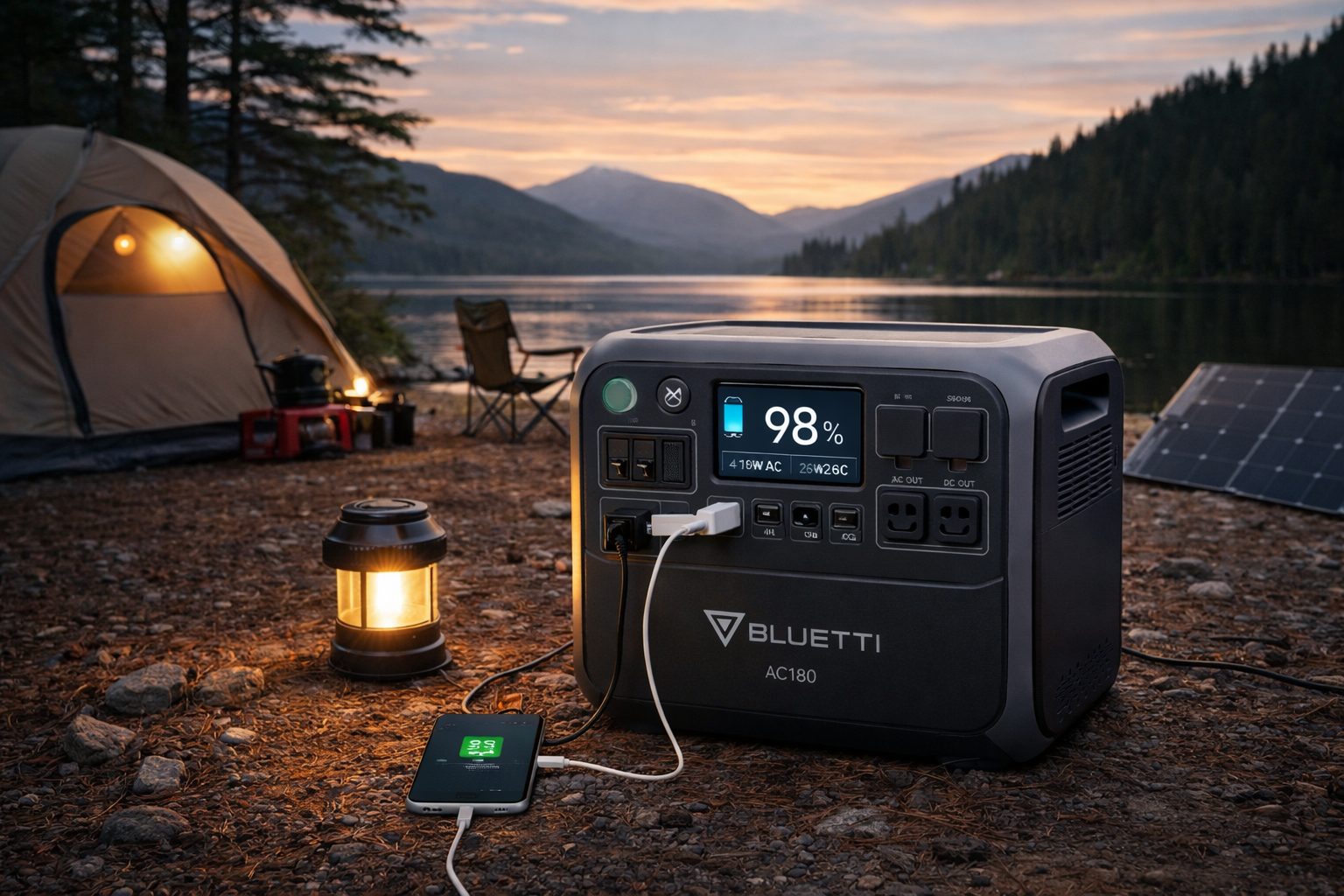
Portable power stations have become an increasingly popular energy solution for camping and outdoor activities. As more people spend time outdoors, whether for short trips or extended stays, the need for reliable and portable electricity has grown. Portable power stations provide a practical way to power essential devices without relying on traditional fuel-based generators or fixed electrical connections.
One of the main reasons portable power stations are well suited for camping is their quiet operation. Unlike petrol or diesel generators, they do not produce engine noise, making them suitable for campsites, nature reserves, and shared outdoor spaces. This allows campers to enjoy electricity without disturbing their surroundings or other campers nearby.
Portable power stations are also emission-free, which makes them safer to use in enclosed or semi-enclosed spaces such as tents, camper vans, and RVs. Because they do not burn fuel, there is no risk of exhaust fumes, which is an important consideration for overnight use and family-friendly camping environments.
Why Campers Use Portable Power Stations
Campers commonly use portable power stations to charge everyday electronics such as smartphones, tablets, cameras, and laptops. These devices are often essential for navigation, communication, and capturing memories during outdoor trips. Portable power stations allow users to keep devices charged without relying on vehicle batteries or campsite electrical hookups.
In addition to charging electronics, portable power stations are used to power lighting systems, including LED lanterns and string lights. Proper lighting improves safety and comfort at campsites, especially during evenings and early mornings. Some campers also use power stations to operate small fans, portable coolers, or electric blankets, depending on weather conditions.
For longer camping trips, portable power stations can support small cooking appliances such as electric kettles or induction cookers, provided the unit has sufficient output capacity. This adds convenience for campers who prefer simple meal preparation without using open flames.
Key Features to Consider for Camping Use
When choosing a portable power station for camping, battery capacity is one of the most important factors. Capacity is measured in watt-hours (Wh) and determines how long the power station can supply electricity. Lower-capacity models are typically sufficient for charging phones and lights, while mid-capacity units support longer usage and multiple devices.
Portability is another critical feature. Campers often prioritise lightweight designs with built-in handles or compact shapes that are easy to transport. A power station that is too heavy or bulky may be inconvenient for tent camping or hiking-based trips.
Output options also matter. A camping-friendly power station usually includes a mix of AC outlets, USB ports, and DC outputs. This allows users to power different types of devices without additional adapters or accessories.
Durability is another consideration, especially for outdoor environments. While most portable power stations are not fully waterproof, many are designed to withstand light outdoor conditions. Using protective cases or shelters can help extend the lifespan of the device.
Solar Charging for Outdoor and Off-Grid Camping
Solar compatibility is a key advantage of portable power stations for camping. Solar panels allow users to recharge their power stations using sunlight, reducing dependence on wall outlets or vehicle charging. This is particularly useful for off-grid camping and extended outdoor stays.
Foldable and portable solar panels are commonly paired with camping power stations because they are easy to transport and set up. During daylight hours, solar panels can replenish the battery, allowing continued use into the evening and night.
Solar charging performance depends on factors such as panel wattage, sunlight conditions, and panel positioning. While solar charging may not fully replace other charging methods in all conditions, it provides a valuable supplementary power source for outdoor use.
Matching Power Station Size to Camping Needs
Different camping styles require different power solutions. Minimalist campers or weekend travellers may only need a small power station for basic charging. These compact units are easy to carry and sufficient for short trips.
Campers staying for longer periods or travelling in groups often choose mid-capacity portable power stations. These units offer a balance between portability and runtime, allowing multiple devices to be powered throughout the day.
For RV camping or base camps, larger-capacity portable power stations may be suitable. These models provide extended runtime and higher output, supporting more demanding devices and longer stays, though they are typically heavier.
Understanding how a portable power station will be used helps narrow down suitable options. Exploring different portable power stations allows campers to select models that align with their specific outdoor needs.
https://www.solargogear.com/portable-power-stations/
Planning a Reliable Camping Power Setup
A reliable camping power setup combines the right portable power station with appropriate charging options. Considering battery capacity, portability, and solar compatibility helps ensure that essential devices remain powered throughout the trip.
Portable power stations offer a flexible and convenient way to access electricity outdoors, making them a practical choice for modern camping and outdoor activities.