
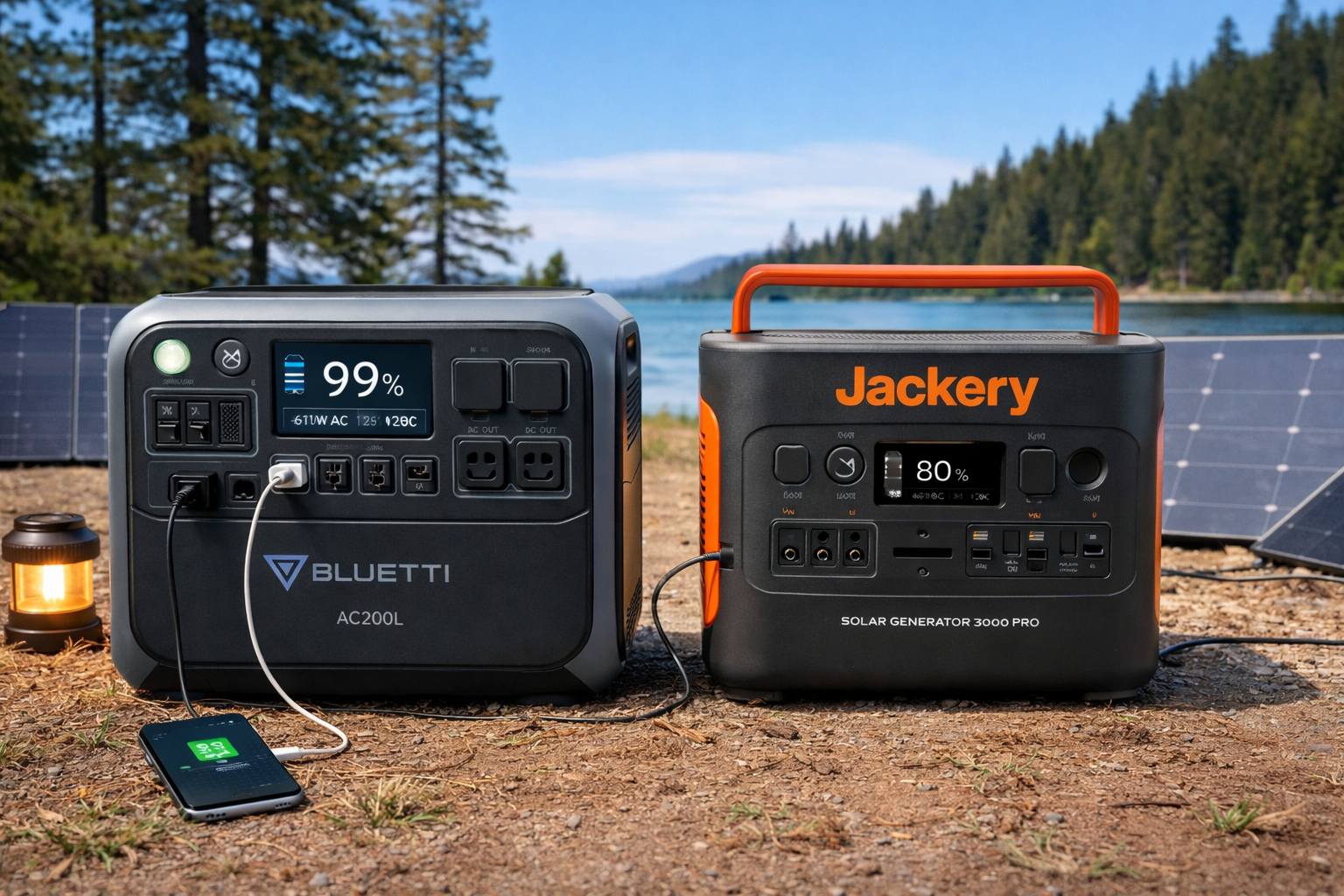
Portable power stations have become a popular solution for camping, emergency backup, and off-grid electricity needs. Among the many brands available, BLUETTI and Jackery are two of the most widely recognised names in the portable power station market. Both brands offer a range of models designed to supply clean, rechargeable power in situations where access to the electrical grid is limited.
While BLUETTI and Jackery portable power stations serve similar purposes, there are practical differences in design, capacity options, and charging features that may influence which brand is better suited for a particular use case. Understanding these differences helps users make informed decisions based on real-world needs rather than brand names alone.
Overview of BLUETTI Portable Power Stations
BLUETTI portable power stations are commonly associated with a wide range of capacity options, from compact units for basic charging to high-capacity systems designed for extended backup and off-grid use. Many BLUETTI models are designed with multiple output ports, allowing users to power several devices at the same time.
A notable aspect of BLUETTI portable power stations is their focus on expandability and solar compatibility. Some models support additional battery modules, which allows users to increase total capacity over time. This can be useful for users who want flexibility as their power needs grow.
BLUETTI power stations are often used for camping, RV travel, emergency home backup, and outdoor work setups. Their design tends to prioritise versatility, making them suitable for users who want a power station that can adapt to different scenarios.
Overview of Jackery Portable Power Stations
Jackery portable power stations are widely recognised for their user-friendly design and straightforward operation. The brand offers models that range from lightweight units for travel to high-capacity power stations intended for longer runtimes and higher energy demands.
Jackery often refers to its power stations as “solar generators” when paired with compatible solar panels. Functionally, these systems operate as portable power stations that can be charged using wall outlets, vehicles, or solar panels. This terminology reflects their emphasis on renewable charging options rather than fuel-based generation.
Jackery portable power stations are commonly used for camping, outdoor activities, and emergency power support. Their designs often focus on portability and ease of use, which appeals to users looking for a simple and accessible power solution.
Battery Capacity and Power Output
When comparing BLUETTI vs Jackery portable power stations, battery capacity is one of the most important factors. Both brands offer models with varying watt-hour (Wh) ratings, which determine how long the power station can supply electricity.
Lower-capacity models from either brand are typically suitable for charging phones, laptops, lights, and small electronics. Mid-capacity units can support longer runtimes and additional devices, while high-capacity power stations are intended for extended use or powering larger appliances.
Power output, measured in watts, determines which devices can be powered simultaneously. Users should consider both capacity and output when comparing models, as a higher-capacity battery does not always mean higher output capability.
Charging Options and Solar Compatibility
Both BLUETTI and Jackery portable power stations support multiple charging methods. Standard charging options include wall outlets and vehicle charging ports, making them convenient for home and travel use.
Solar charging is a key feature for both brands. Portable solar panels allow power stations to be recharged using sunlight, which is particularly useful for off-grid travel and outdoor activities. Charging speed depends on solar panel wattage, sunlight conditions, and the power station’s input capacity.
Some users may prioritise faster solar input or broader compatibility with different panel sizes. Reviewing charging specifications helps determine which models align with specific charging preferences.
Portability and Design Considerations
Portability plays a major role in choosing between BLUETTI and Jackery portable power stations. Smaller units are lightweight and easy to carry, making them suitable for short trips and mobile use. Larger units provide more power but are heavier and better suited for stationary setups or vehicle-based travel.
Design features such as handles, screen displays, and port layout also affect usability. While both brands offer intuitive designs, individual preferences may vary depending on how and where the power station will be used.
Choosing Between BLUETTI and Jackery
Choosing between BLUETTI and Jackery portable power stations depends on intended use, power requirements, and desired features. Users who value expandability and long-term flexibility may prefer certain BLUETTI models, while those prioritising simplicity and portability may find Jackery models suitable.
Rather than focusing on brand alone, comparing specific models based on capacity, output, and charging options helps ensure the right fit. Exploring different portable power stations by brand allows users to make informed decisions aligned with their actual energy needs.
https://www.solargogear.com/portable-power-stations/