
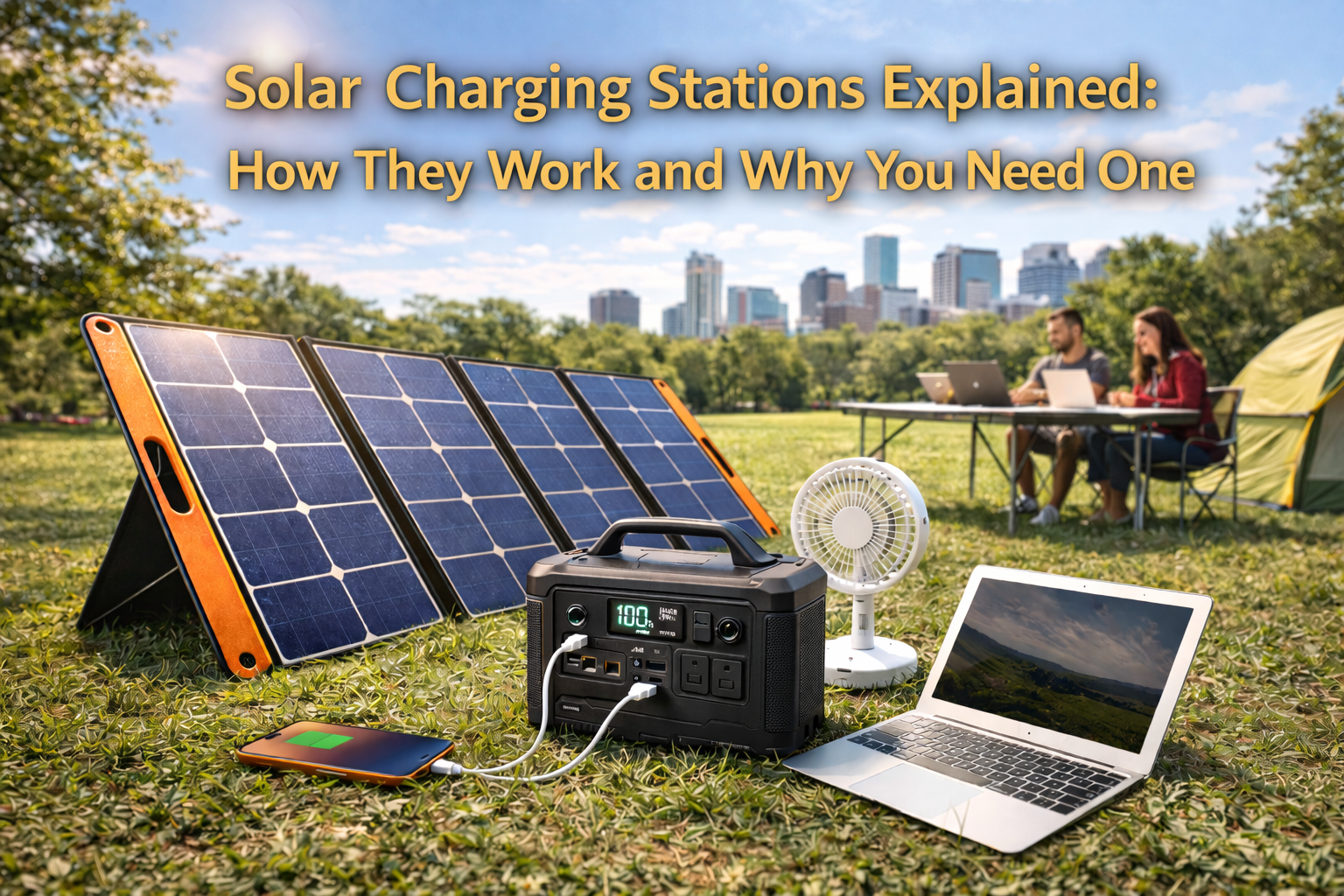
In today’s world, staying connected and powered is no longer a luxury—it’s a necessity. Whether at home, outdoors, or traveling, our reliance on laptops, smartphones, tablets, and other electronic devices keeps growing. But what happens when you’re far from an outlet or the power goes out unexpectedly? The solution lies in solar charging stations, a sustainable, reliable, and versatile power source.
This article breaks down how solar charging stations work and explains why they’ve become a must-have for eco-conscious homeowners, outdoor enthusiasts, digital nomads, and anyone who wants energy independence.

What Is a Solar Charging Station?
A solar charging station is a device that uses solar panels to capture energy from the sun and convert it into usable electricity for powering or charging electronic devices. Unlike traditional chargers that depend on the electrical grid, solar charging stations provide renewable, portable, and sustainable energy—anytime, anywhere.
Modern versions come in various sizes, from compact portable stations for personal use to larger units capable of powering small appliances. Some are designed for emergency backup, while others are perfect for camping trips, festivals, or even home use to offset electricity bills.
How Do Solar Charging Stations Work?
Solar charging stations rely on a simple yet powerful process:
1. Energy Capture
The solar panels capture sunlight and convert it into direct current (DC) electricity through photovoltaic (PV) cells.
2. Energy Conversion
Since many devices run on alternating current (AC), the station typically includes an inverter to convert DC into AC power for universal use.
3. Energy Storage
Most solar stations come with built-in batteries or can connect to external power banks. This means you can store energy during the day and use it at night or on cloudy days.
4. Energy Output
Depending on the design, stations include USB ports, DC outlets, and AC plugs, allowing you to charge multiple devices simultaneously—from smartphones and tablets to laptops and small appliances.
In short, a solar charging station acts as a mini renewable power plant you can take anywhere.
Why You Need a Solar Charging Station
Here are the top reasons why solar charging stations are becoming a must-have in both homes and outdoor adventures.
1. Reliable Off-Grid Power
Whether you’re camping in the mountains or traveling through remote areas, a solar charging station ensures you’re never without power. Unlike power banks that run out after a few charges, solar stations recharge themselves as long as there’s sunlight.
2. Eco-Friendly and Sustainable
Solar energy is clean, renewable, and abundant. By using a solar charging station, you:
- Reduce your carbon footprint.
- Lower dependency on fossil fuels.
- Support a more sustainable lifestyle.
It’s a small but impactful step toward protecting the planet while staying connected.
3. Cost Savings in the Long Run
Although solar charging stations can require an upfront investment, they pay off over time. Sunlight is free, and with a durable station, you’ll save money on electricity bills, disposable batteries, and even generator fuel.
4. Essential for Emergencies
Blackouts, storms, and natural disasters often leave people without power for hours—or days. A solar charging station allows you to:
- Keep communication devices like phones charged.
- Power radios, flashlights, or small medical devices.
- Maintain peace of mind during emergencies.
For preparedness alone, having one at home is invaluable.
5. Versatility Across Devices
Today’s solar charging stations are designed to handle multiple devices and outputs, including:
- Smartphones and tablets via USB or USB-C ports.
- Laptops and drones through DC ports.
- Small appliances such as fans, lights, or coolers via AC outlets.
This makes them a multi-functional tool for both personal and professional use.
Types of Solar Charging Stations
Solar charging stations come in different styles to meet various needs:
- Portable Solar Stations: Compact and lightweight, great for camping, hiking, or festivals.
- Home-Based Stations: Larger units with more capacity, designed to supplement household power use or serve as backup energy during outages.
- Event and Community Stations: Large setups used at outdoor events or disaster relief efforts, providing multiple charging points for groups of people.
What to Look for When Buying a Solar Charging Station
If you’re considering investing in one, here are key features to evaluate:
- Power Capacity (Watts): Higher capacity supports more devices and faster charging.
- Battery Storage (Wh): Allows stored energy use at night or during cloudy conditions.
- Port Variety: Multiple outputs (USB, DC, AC) ensure compatibility with all your devices.
- Portability: Foldable panels and lightweight design make it easier to carry.
- Durability: Weatherproof and dustproof stations are ideal for outdoor adventures.
- Expandability: Some models allow adding more panels or batteries for greater flexibility.
Practical Uses of Solar Charging Stations
- Homeowners: Lower electricity bills and stay prepared for outages.
- Campers & Hikers: Power essentials like GPS, phones, and cameras off-grid.
- Digital Nomads: Work remotely without hunting for outlets.
- Travelers: Stay powered during long journeys or in remote destinations.
- Event Organizers: Provide eco-friendly charging for festivals, markets, or community gatherings.
Final Thoughts
Solar charging stations are more than just a modern convenience—they’re a step toward a cleaner, more independent energy future. By harnessing the power of the sun, they give you reliable electricity anywhere, anytime.
Whether you’re preparing for emergencies, living off-grid, or simply looking for an eco-friendly way to stay connected, investing in a solar charging station is one of the smartest choices you can make.
With the combination of sustainability, cost savings, and versatility, solar charging stations prove that the future of portable energy is bright—powered by the sun.
Would you like me to now create the Meta Title, Meta Description, Focus Keyword, and Permalink for this article so it’s fully optimized for publishing on your site?