
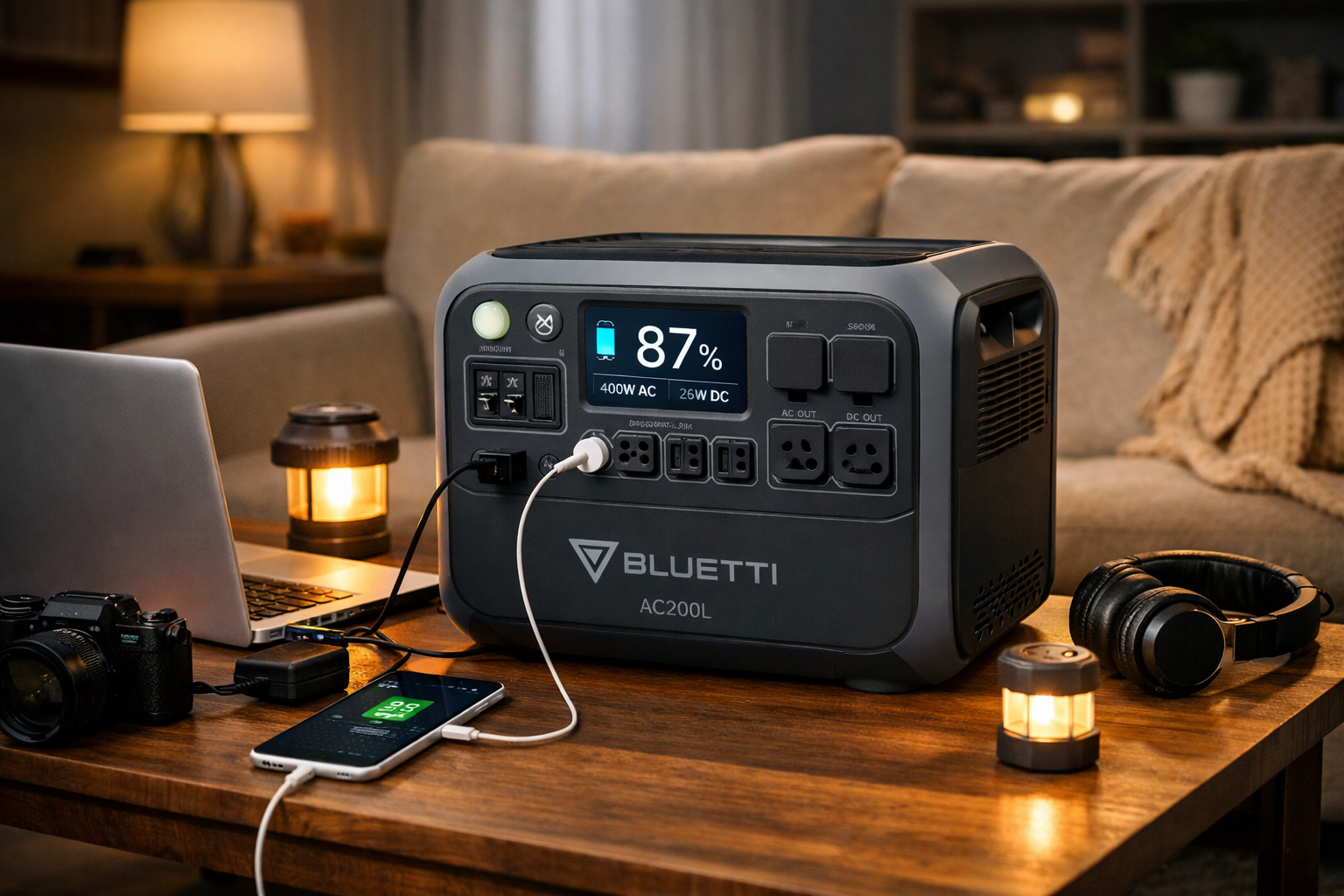
What Is a Portable Power Station?
A portable power station is a rechargeable device designed to store electrical energy and supply power to electronic devices and appliances without relying on fuel or a permanent connection to the electrical grid. These systems are commonly used for camping, outdoor activities, emergency backup, and off-grid situations where access to conventional electricity may be limited or unavailable.
Unlike traditional generators that use petrol or diesel, portable power stations operate using an internal battery. This allows them to provide electricity quietly and without producing fumes or emissions. Because of this, they are suitable for both indoor and outdoor use, including homes, tents, RVs, and workspaces.
Portable power stations are often chosen by people looking for a cleaner and more convenient way to access backup or portable electricity. They are especially useful in environments where noise, fuel storage, or ventilation may be a concern.
How Does a Portable Power Station Work?
A portable power station works by storing energy in a built-in rechargeable battery, which can later be used to power devices through various output ports. Most power stations include multiple types of outputs, such as AC outlets for household appliances, USB ports for electronics, and DC ports for specialised equipment.
The stored energy is converted into usable electricity through an internal inverter. This process allows the power station to supply stable power suitable for sensitive electronics like laptops, phones, and cameras. The available output and runtime depend on the battery capacity and the power requirements of the connected devices.
Portable power stations can be recharged in several ways. Common charging methods include plugging into a wall outlet, using a vehicle’s charging port, or connecting compatible solar panels. Solar charging is particularly useful for off-grid and outdoor use, as it allows users to replenish power using sunlight during the day.
Common Uses of Portable Power Stations
Portable power stations are used in a wide range of situations. One of the most common uses is camping and outdoor travel. Campers rely on portable power stations to charge phones, power lights, run portable fans, and operate small cooking appliances without disturbing the surrounding environment.
Another common use is emergency backup power. During power outages, portable power stations can keep essential devices running, such as routers, lighting, medical equipment, and communication tools. While they are not a full replacement for home electrical systems, they provide a practical solution for short-term power needs.
Portable power stations are also used by remote workers, outdoor photographers, and tradespeople who need electricity in locations without access to grid power. Their portability and ease of use make them suitable for temporary work setups and mobile operations.
Portable Power Stations vs Traditional Generators
Portable power stations differ significantly from traditional fuel-powered generators. One key difference is how they produce electricity. Portable power stations store energy in batteries,while generators create electricity by burning fuel. This results in quieter operation and eliminates exhaust fumes.
Another difference is maintenance. Portable power stations generally require minimal maintenance compared to generators, which may need regular servicing, fuel management, and mechanical upkeep. Additionally, power stations are typically easier to transport and store.
However, portable power stations usually have limited capacity compared to large generators. This makes them more suitable for powering essential devices rather than running entire households for extended periods.
Choosing the Right Portable Power Station
Selecting the right portable power station depends on several factors, including battery capacity, output power, and charging options. Battery capacity determines how long the power station can supply electricity, while output power affects which devices can be used simultaneously.
Portability is another important consideration. Smaller units are easier to carry and store, while larger units provide longer runtime but may be heavier. Users should also consider whether solar charging compatibility is important for their intended use.Understanding these factors helps users explore portable power stations that align with their specific needs and usage scenarios.
https://www.solargogear.com/portable-power-stations/