
Choosing the right backup power solution has become more important than ever in 2026. Whether you are preparing for power outages, planning camping trips, travelling in an RV, or building an off-grid setup, two popular options usually stand out: portable power stations and gas generators.
While both provide backup electricity, they work very differently and suit different lifestyles.
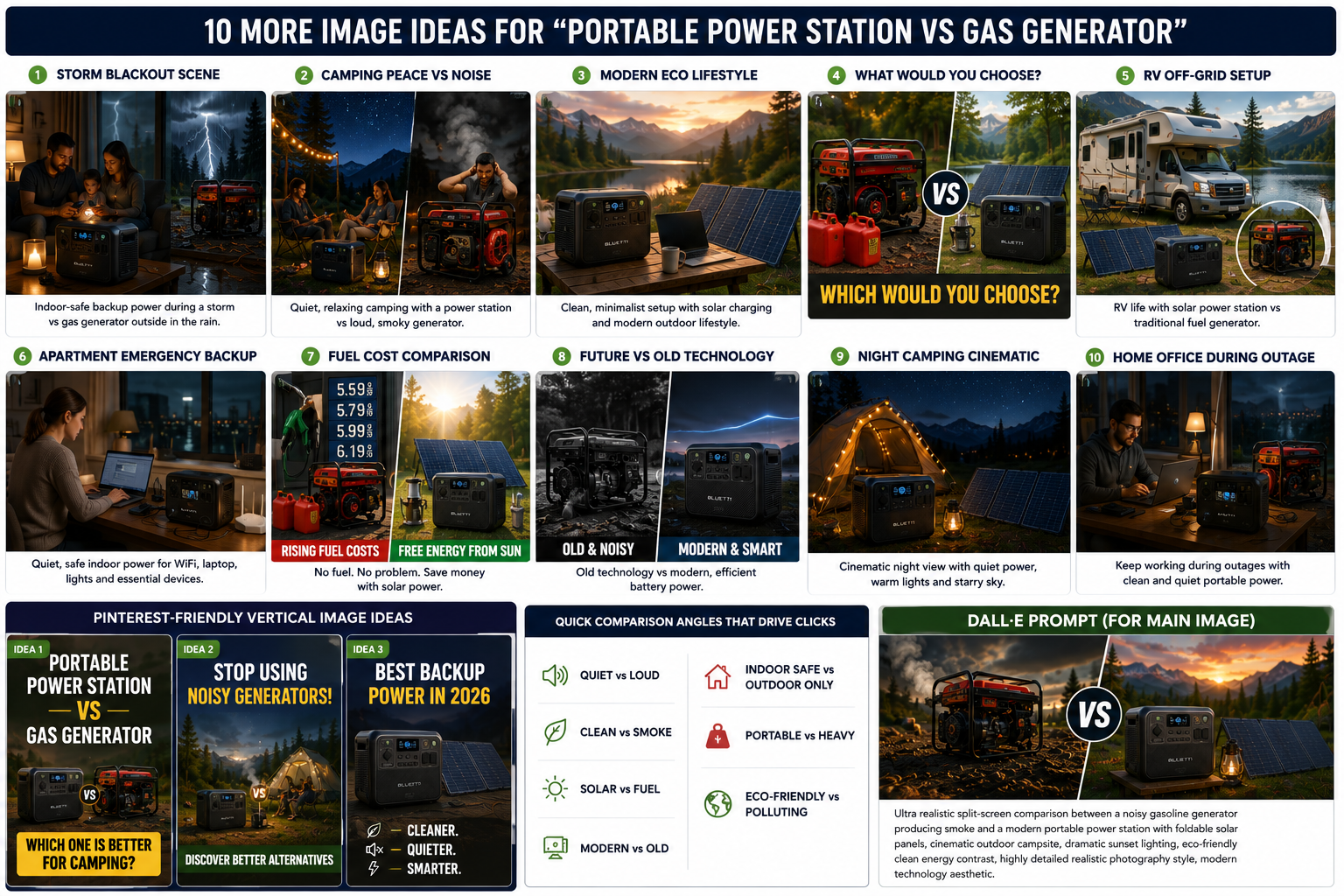
Portable power stations offer quiet, battery-powered energy that can often recharge using solar panels. Gas generators, on the other hand, rely on fuel and are traditionally used for heavy-duty backup power.
In this guide, we compare portable power stations and gas generators to help you decide which option is best for your needs.
What Is a Portable Power Station?
A portable power station is a rechargeable battery system designed to power electronics and small appliances.
Modern models usually include:
- AC wall outlets
- USB ports
- DC outputs
- solar charging compatibility
- lithium or LiFePO4 batteries
Portable power stations are commonly used for:
- camping
- RV travel
- emergency backup
- outdoor work
- van life
- powering small appliances
Popular models like the BLUETTI AC180 combine portability with strong battery capacity and solar charging support.
Read more:
BLUETTI AC180 Product Page
Smaller models such as the BLUETTI EB3A are ideal for lightweight travel and basic charging needs.
Read more:
BLUETTI EB3A Product Page
What Is a Gas Generator?
A gas generator uses petrol, diesel, or propane fuel to generate electricity through an engine-powered system.
Gas generators are often used for:
- whole-home backup
- construction sites
- heavy-duty appliances
- long runtime needs
- large power tools
They typically provide higher continuous wattage than smaller battery power stations but require fuel and regular maintenance.
Portable Power Station vs Gas Generator
1. Noise Level
One of the biggest differences is noise.
Portable power stations are extremely quiet because they do not use combustion engines. Many models operate silently except for occasional cooling fans.
Gas generators can be loud, especially in camping environments or residential areas.
Best Choice for Quiet Operation
Portable power stations
2. Indoor Safety
Portable power stations produce no fumes during operation, making them much safer for indoor or enclosed-space use when handled properly.
Gas generators produce carbon monoxide and should never be used indoors.
Best Choice for Indoor Use
Portable power stations
3. Fuel vs Solar Charging
Portable power stations can recharge from:
- wall outlets
- car chargers
- foldable solar panels
This makes them attractive for off-grid and eco-friendly use.
Gas generators require fuel, which may become expensive or difficult to access during emergencies.
Best Choice for Renewable Energy
Portable power stations
4. Power Output
Gas generators still have an advantage when it comes to powering very large appliances for extended periods.
However, larger portable power stations have become much more powerful in recent years.
Models like the BLUETTI AC200L can support many home backup and camping needs while remaining quieter and cleaner than fuel generators.
Read more:
BLUETTI AC200L Product Page
Best Choice for Heavy Continuous Loads
Gas generators
5. Maintenance
Portable power stations require very little maintenance.
Gas generators typically need:
- oil changes
- fuel management
- engine servicing
- filter replacement
For many people, battery systems are much easier to manage.
Best Choice for Convenience
Portable power stations
6. Camping and RV Use
Portable power stations are becoming extremely popular among campers because they are:
- quiet
- lightweight
- easy to transport
- solar compatible
- campsite friendly
The BLUETTI AC70 is a good example of a camping-friendly portable power station.
Read more:
BLUETTI AC70 Product Page
Gas generators may still suit RV owners needing very high continuous power output.
Comparison Table
| Feature | Portable Power Station | Gas Generator |
|---|---|---|
| Noise | Very quiet | Loud |
| Indoor Use | Safer | Unsafe |
| Fuel Needed | No | Yes |
| Solar Charging | Yes | No |
| Maintenance | Low | High |
| Eco-Friendly | Better | Lower |
| Portability | Easy | Heavier |
| Heavy Appliance Support | Moderate to High | Very High |
| Camping Friendly | Excellent | Moderate |
Which Option Is Better for Emergencies?
For short-term outages and everyday emergency preparedness, portable power stations are often the easier and safer solution.
They work especially well for:
- phones
- internet routers
- laptops
- lighting
- CPAP machines
- portable fridges
For long-term whole-home backup during major outages, some households may still prefer larger gas generators.
Are Portable Power Stations Replacing Gas Generators?
In many situations, yes.
Advancements in battery technology and solar charging have made portable power stations far more practical than they were a few years ago.
Many people now prefer battery-powered systems because they:
- reduce noise
- avoid fuel storage
- support solar charging
- require less maintenance
- work safely in more environments
However, gas generators still remain useful for very high-power applications and extended heavy usage.
Final Thoughts
The choice between a portable power station and a gas generator depends largely on how you plan to use it.
If you value:
- quiet operation
- portability
- solar charging
- low maintenance
- indoor-friendly backup power
then a portable power station is often the better option.
Products like the BLUETTI AC180, BLUETTI AC70, and BLUETTI AC200L offer modern backup power solutions for camping, emergencies, and off-grid living.
If you need maximum continuous power for large appliances or heavy-duty job sites, a gas generator may still be worth considering.
As battery technology continues improving, portable solar-ready power stations are becoming one of the most popular alternatives to traditional generators.
FAQ
Are portable power stations quieter than gas generators?
Yes. Portable power stations are significantly quieter because they do not use fuel engines.
Can a portable power station replace a generator?
For many everyday uses like camping, emergency backup, and small appliances, yes. Large whole-home backup may still require a generator.
Are portable power stations safer indoors?
Yes. They do not produce carbon monoxide during operation like gas generators do.
Can portable power stations use solar panels?
Yes. Many models support foldable solar panel charging for off-grid use.